Peer Feedback

After struggling for so long to get my WordPress account created using the Curtin email address – in the end I had to use my personal email address, that when I had written my final blog, all I felt was relief hitting that Publish button for the final time. I wasn’t feeling very confident about the content and design of it, but at least I had given it a go and more importantly completed it on my own.

 So when I received the feedback from my peer regarding my Blog, wow was I blown away. The confidence that had disappeared when clicking Publish reappeared and I felt a renewed sense of accomplishment.

 Was the feedback fair, it most certainly was. Thankfully my content was clear and my peer understood what I was trying to convey. The main criticism, and rightly so, was that it lacked images. I have now added some more images, thanks to the feedback from my peer.

Thank you!

Image

Lifelong Learning

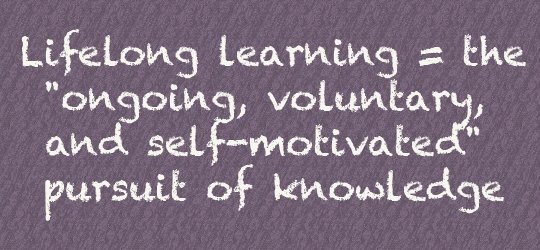
Lifelong learning is interpreted as engaging people with learning throughout all stages of their lives. Lifelong learning has been interpreted in many ways over the years, ranging from ‘second chance’ education to linking secondary or tertiary education with industry. So how can schools help students to become lifelong learners? Students need to remain engaged in learning and develop characteristics that will make learning an enjoyable and integral part of their lives for when they leave school.

As a ‘mature age’ student my motive for learning is to enhance job prospects. I didn’t overly enjoy learning at high school however I have a renewed respect for learning and I am far more curious than I once was.  The emphasis on curiosity is a classic lifelong learning characteristic, to ‘find out more’, ‘for my own inner development’. It indicates an enjoyment of learning and an expectation to keep on learning.

timthumb.php


Link

Digital Blurring

Sploder game

As a parent of 3 boys ranging from 3 to 17, it is hard to escape this online gaming world and to be brutally honest I hate it. Yes hate! Look, unless it is for educational purposes I really don’t see the benefit of being starring at a screen for hours on end… In my experience online gaming is addictive and mind numbing and I struggle to see what skills are learnt from online gaming and how these transfer to real life situations. Lets face it, how many of us end up in high speed chases or military missions or even fighting a sci-fi being! Admittedly my exposure to online gaming is limited and really how many “educational” games is a teen going to play!

So trying to look at it positively, what skills do we gain from online gaming? Cognitive skills such as spatial navigation, reasoning, memory and perception are strengthened by some online games. Just as problem solving skills can be developed. Engaging children in a learning environment can be at times quite difficult so in that sense I support online games provided they are appropriate for the students and the subject and that they are supervised. It’s more the online games played out of school by predominately teens that cause concern particularly especially when they are incredibly violent. These games can be detrimental to their mental health, which can consequently lead to devastating effects.

sploder-blks-e1379599520922

Link

Digital Fluency

images

Digital fluency is basically defined as being able to use technology confidently. We talk about being fluent in the classroom in terms of being able to read, write and communicate verbally. With technology fluency a student demonstrates that they are able to manipulate, transform and move information across a variety of media and platforms.

We look at games such as Scratch, for example. Scratch is a program that can help students think creatively and create interactive games, stories and animation. It can be used across a wide variety of subjects such as math, science and arts. Scratch is a great tool for engaging students and can be taught at many levels from kindergarten where you can create a simple dressing up program to high school students who will have an understanding of how to design, write and debug programs, and use logical reasoning to explain how some algorithms work or don’t work.

If we look towards the future, digital fluency transcends devices, apps and programs. Students are quickly learning to accurately and deliberately communicate, collaborate and create across platforms. Teachers need to support and help develop these attributes so students are digitally fluent.

http://scratch.mit.edu/projects/22440255/

Gallery

Digital Information

Technology in the classroom has become so integrated that half the time we don’t even realise we are using it. Teachers are become more and more digitally fluent making technology in the classroom easier to use and much less scary. So what kind of digital information is used in the classroom?

Web Sites: The Internet has many sites that easily lend themselves to classroom integration.  Foreign language classes are able to access online news articles relating to the language they are learning and also find links to translation pages. The Internet is loaded with activities for all types of classes. A science teacher can use the Internet to base her class activities around, for example, if the students are learning about the life cycle of a frog, the teacher can include current readings on the topic or activities that the students can participate in.

PowerPoint and Excel: They are relatively easy tools to use in the classroom. All kinds of research projects can use these programs. PowerPoint can be used for make posters and support oral speeches. Excel is a great tool for charts and graphs and can be used to work out the results for many types of questions.

SMART board: This is a fantastic tool for teachers to use especially for brainstorming sessions. Students can work out math problems and the work can be saved for future reference. Using PowerPoint with the Smart Board allows the teacher to include pictures, sounds and music to enhance the presentation and make it far more interesting and engaging for the students.

images

Image

The Digital Divide

The digital divide is unfortunately a growing concern in today’s society. For students who are not privileged by having the Internet or a computer at home are at a huge disadvantage. Some students have to spend their lunch times in a classroom or are staying back after school to complete homework or assignments that are wholly dependent on technology. The speed in which we are moving forward with by integrating technology into our education has put a number of students at a huge disadvantage and this is not very fair. There are some schools that are also insisting that students bring their own devices to school rather than the school providing them, which is putting an even bigger strain on household budgets, especially when there is more than 1 child.

There is also evidence that there is a growing digital divide between parents and technology. Prior to the digital world, parents’ biggest concern was being able to help their children with their homework. Nowadays parents have to become digitally fluent and for some parents who have little or no exposure to technology that can be even more difficult. Not to mention the fear parents also have of cyber bullying or cyber stalking. There are many social media platforms that children have access to that make them so much vulnerable.

Infographic

What’s the deal with Cyber Bullying?

 cropped-large1.png

We understand that cyber bullying involves behaviour that is hurtful, abusive and intimidating. And we know that it is done to deliberately hurt, embarrass and even threaten individuals and groups. As the term suggests, the platform in which it is carried out is by the use of technology through emails, text messaging and social media such as Facebook and Twitter.

So why do people do it? Is it due to their own insecurities, is it because they are bored or simply don’t like someone or because it makes them feel better by inflicting pain onto others? Either way it is inexcusable. The effects of Cyber bullying are long lasting and in some circumstances can be quite devastating with individuals taking their own life.  Granted each person deals with bullying differently, but the majority isn’t strong enough to fight through and as a result end up feeling miserable and go on to develop anxiety and depression.  There have been many cases highlighted in the media where the result of cyber bullying has been suicide for example Chloe Fergusson and more recently Charlotte Dawson.

So how do we stop it? While there are organisations such as Kids helpline to support victims we need to ensure that Cyber bullies are exposed and reported. We need to be strong and stand up for ourselves and for those that are being targeted.

If you are being cyber bullied or know someone who is,  please talk to your teacher, parents or friends. Or contact the KidsHelpline website or give them a call on 1800 55 1800.